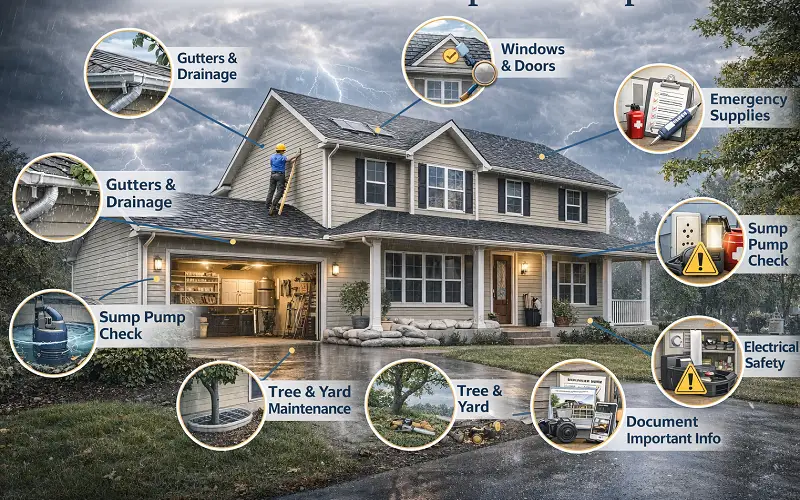
When storm season rolls in, the difference between a home that weathers it well and one that doesn’t often comes down to preparation. Heavy rain, strong winds, and flooding can cause serious damage if a house isn’t ready for what’s coming. Taking the time to inspect and reinforce key areas before the season hits can save homeowners a significant amount of trouble, stress, and repair costs down the line.
Gutters, Drainage, and Sewerage
One of the first things to address before storm season is the drainage system around the home. Gutters that are clogged, sagging, or leaking will fail to channel rainwater away from the roof and foundation, leading to water pooling, seepage, and long-term structural damage. Unlike traditional sectional gutters, which are pieced together and prone to leaking at the joints over time, seamless gutters are cut from a single continuous piece and fitted to the specific dimensions of the home.
If you’re a homeowner looking for professional seamless gutter installers, get in touch with GutterPro for an assessment and estimate. Remember that the sewerage around the property should be inspected as well, since drains that are slow or partially blocked will back up quickly during heavy rainfall and cause damage both inside and outside the home.
Roof Inspection and Repairs
The roof is the first line of defense against heavy rain, and any weakness there will be felt quickly once a storm arrives. Loose or missing shingles, cracked flashing around chimneys and vents, and damaged underlayment can all allow water to penetrate. A visual inspection from the ground can reveal obvious issues, but getting a closer look from the roof or hiring a professional inspector is the more thorough approach. Attic spaces should also be checked for signs of previous leaks, such as water stains, damp insulation, or mold.
Catching these issues early means repairs can be made before rain turns a small problem into a large one. Flat or low-slope roof sections deserve extra attention, as they are more likely to collect standing water if drainage is poor. Making sure any roof vents and skylights are properly sealed before the season begins adds another layer of protection against water finding its way inside.
Windows, Doors, and Exterior Sealing
Water has a way of finding the smallest gaps, and windows and doors are common entry points during heavy rain. Checking the weather stripping around all exterior doors and replacing any sections that have worn thin or cracked can make a meaningful difference.
Window caulking should also be inspected, especially on older frames where the seal may have dried out and pulled away. Any visible gaps or cracks in exterior walls should be sealed with appropriate waterproof filler. Basement windows are particularly vulnerable during flooding and deserve special attention, as water can easily pool around them and seep inside. Installing window well covers over basement windows is a simple and effective way to keep rainwater and debris from accumulating directly against the glass.
Sump Pumps and Interior Water Management
For homes with basements or crawl spaces, a working sump pump is one of the most valuable tools during storm season. Testing it before heavy rains arrive is essential. Pouring water into the sump pit to trigger the float switch confirms whether it is functioning correctly. Having a battery-powered backup is also a smart precaution, since power outages often accompany severe storms.
If the home does not already have one installed, it is worth considering, particularly in areas prone to significant rainfall. Interior drainage systems, such as French drains installed around the perimeter of the basement, can further help manage any water that does make its way in.
Tree and Yard Maintenance
Overhanging branches can become dangerous during high winds, and large limbs that are already weakened or dead are particularly concerning. Trimming back branches that hang over the roof, driveway, or power lines reduces the risk of damage if a storm knocks them loose. Checking trees on the property for signs of disease, instability, or root issues is also advisable.
A tree that looks healthy from the outside may have internal decay that makes it vulnerable to falling. Clearing the yard of loose items like furniture, planters, and decorative objects before a storm arrives prevents them from becoming projectiles in strong winds. Garden hoses, tools, and anything else left outdoors should be stored away or secured.
Electrical and Utility Safety
Storm preparation also involves thinking about what happens if things go wrong. Knowing where the main water shutoff valve is located can prevent serious flooding if a pipe bursts during a storm. The electrical panel should be accessible and clearly labeled. If the home sits in an area prone to flooding, having appliances and electrical outlets raised above potential flood levels is a worthwhile consideration.
Surge protectors help safeguard electronics in the event of power fluctuations that often accompany storm activity. Keeping a flashlight, extra batteries, and basic emergency supplies on hand ensures the household is not caught off guard if utilities go out temporarily.
Emergency Contacts and Documentation
Having a plan in place before a storm arrives reduces the chaos that can follow one. Keeping a list of emergency contacts, including local services, utilities, and an insurance provider, in an easily accessible place is practical and simple.
Documenting the condition of the home, both inside and outside, through photos or video creates a record that can be invaluable when filing insurance claims after storm damage. Storing important documents in a waterproof container or uploading digital copies to a secure location ensures they are not lost if flooding occurs.
Wrap Up
Storm season does not have to be a source of anxiety. A home that has been properly inspected, sealed, and maintained going into the season is far better positioned to handle whatever comes. Taking these steps one at a time masses the process manageable rather than overwhelming, and the work put in beforehand almost always outweighs the cost and stress of dealing with damage after the fact.