
Property tax assessments influence annual housing costs and long-term budgeting decisions. Accurate valuations help maintain fairness and support responsible financial planning. Careful review of assessment notices helps identify incorrect or inflated property values.
Many homeowners consider the process of filling the property tax protest Texas after reviewing valuation changes. A structured step-by-step approach clarifies each stage and supports confident preparation. Begin early and review every detail carefully for better results.
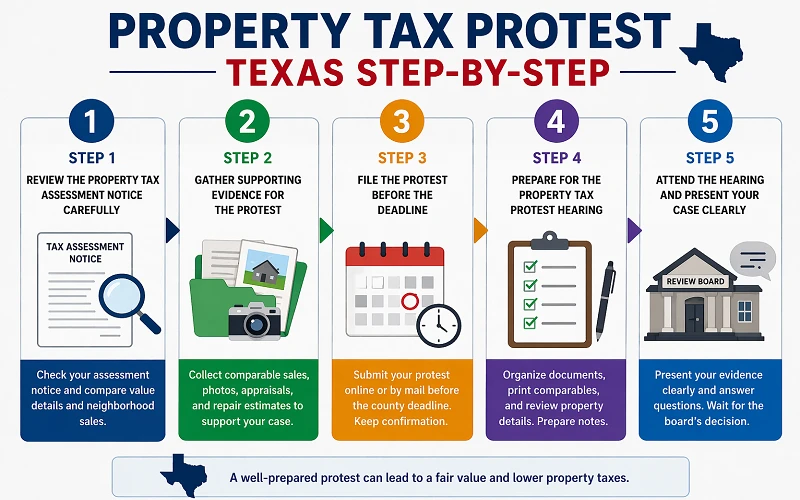
Step 1: Review the Property Tax Assessment Notice Carefully
Assessment notices provide detailed information about property value and comparison data. Each notice includes the current value, the prior value, and the property characteristics. Careful review helps identify discrepancies between assessment amounts and neighborhood sales in Texas.
County appraisal districts publish comparable sales through official websites. These records include square footage, lot size, and improvement descriptions. Reviewing these details helps confirm whether the valuation appears reasonable. Early identification of discrepancies supports stronger preparation for the next protest step.
Step 2: Gather Supporting Evidence for the Protest
Strong documentation supports a persuasive case during appraisal district review. Evidence demonstrates valuation differences and highlights property condition concerns. Organized documentation improves clarity during presentation and discussion.
Relevant materials may include:
- Comparable neighborhood sales support a lower value
- Property condition photos showing repair concerns
- Independent appraisal reports from licensed professionals
- Contractor repair estimates reflecting maintenance needs
Clear documentation strengthens arguments and improves communication during review.
Thorough evidence preparation helps present a clear and credible valuation challenge.
Step 3: File the Protest Before the Deadline
Filing begins through online portals or mailed protest forms. Appraisal district websites provide submission instructions and downloadable forms. Early submission confirms eligibility and prevents unnecessary delays.
Most counties publish protest deadlines within mailed assessment notices. Timely filing ensures hearing eligibility and supports structured preparation. Submission confirmations should remain accessible for reference. Proper filing helps maintain organization throughout the protest process in Texas.
Step 4: Prepare for the Property Tax Protest Hearing
Preparation supports confident communication and structured presentation during hearings. Organized documents help explain valuation discrepancies clearly. Preparation strengthens credibility during review board discussions.
Preparation checklist includes:
- Arrange documents according to valuation relevance
- Prepare notes explaining discrepancies clearly
- Print comparable sales with addresses
- Review appraisal district property descriptions carefully
Structured preparation supports clear and persuasive communication.
Effective preparation improves clarity and supports confident discussion during hearings in Texas.
Step 5: Attend the Hearing and Present the Case Clearly
Appraisal review boards conduct hearings during scheduled appointment times. Clear explanations and organized documents strengthen a persuasive presentation. Board members review materials and request clarification when necessary.
Concise statements highlight discrepancies within property valuation records. Respectful communication supports productive discussion during hearings in Texas. Written decisions usually arrive after review completion. Clear presentation helps maintain professionalism and supports positive outcomes.
Wrap Up
Property tax protests create a structured opportunity for fair valuation review. Organized preparation and timely filing strengthen positive outcomes for property owners. The property tax protest in Texas process supports accurate assessments and balanced annual expenses.
Careful documentation helps demonstrate discrepancies and improves communication during review discussions. Early preparation reduces delays and supports confident participation throughout the process. Consistent review of valuation details helps maintain financial stability for property owners.