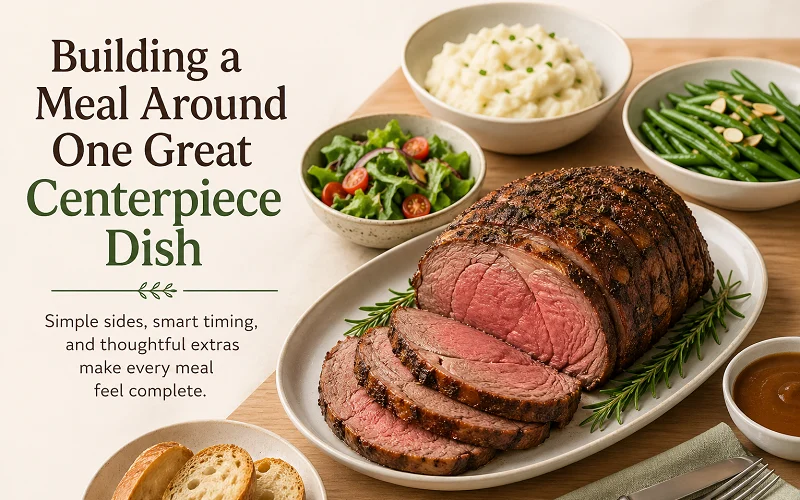
A lot of home-cooked meals fall apart at the planning stage. You might cook a great main dish, but when it’s time to serve, the table feels off. The sides don’t match, the portions feel uneven, or everything tastes heavy. This happens because the meal wasn’t built with a clear focus. When you center the meal around one strong dish, the rest becomes easier to manage. You stop guessing and start making deliberate choices.
This approach saves time, reduces stress, and leads to meals that feel complete. Once you understand how to build around a centerpiece, you won’t need complicated menus to make food feel special.
Choosing a Dish That Deserves the Spotlight
A centerpiece dish should feel like it carries the meal on its own. It usually has a strong flavor, a satisfying portion, and a visual presence on the table. Think of dishes that people naturally notice first, like a roast, a whole chicken, or a large baked dish. These are the kinds of meals you plan ahead for, often saving them for weekends or special gatherings because they take a bit more care. You don’t need something complicated, but it should feel intentional and worth the effort.
If the main dish feels plain or rushed, the rest of the meal will struggle to hold together. Choose something you’re confident in cooking and can execute well. For example, when you decide to follow a homemade rotisserie prime rib recipe, you’re already committing to a dish that sets the tone for everything else on the table. Once you lock in a strong main, the rest of the planning becomes much more focused.
Reading the Flavors Before You Add Anything Else
Before choosing sides, take a moment to understand the main dish. Pay attention to the seasoning, cooking method, and overall taste. Is it rich and fatty, or light and fresh? Does it lean toward spices, herbs, or smoke? This step helps you avoid mismatched combinations. For example, if your main dish is already heavily spiced, adding more bold flavors can make the meal feel overwhelming.
Instead, look for ways to support or balance what’s already there. This doesn’t require deep culinary knowledge. Just taste your food and think about what it needs. When the flavors make sense together, the meal feels more natural and easier to enjoy.
Balancing Heavier Dishes with Fresh, Light Sides
Rich dishes can quickly make a meal feel tiring if everything on the plate is heavy. A fatty roast, creamy pasta, or slow-cooked meat needs something lighter to balance it out. Fresh vegetables, simple salads, or lightly cooked greens help reset the palate between bites. You don’t need to overthink this.
A basic salad with a sharp dressing or steamed vegetables with a squeeze of lemon can do the job. The goal is to create contrast so the main dish stays enjoyable throughout the meal. When you skip this step, people tend to eat less because the food feels too dense. Balance keeps the meal comfortable and satisfying.
Using Texture to Make the Meal Feel Complete
Texture often gets ignored, but it plays a big role in how a meal feels. If everything on the plate is soft, the meal becomes monotonous even if the flavors are good. Try to include a mix of textures without adding extra complexity. A crisp salad, roasted vegetables with some bite, or even toasted bread can change the experience.
You want a combination that keeps each bite interesting. This doesn’t mean adding more dishes—it means making smarter choices with what you already plan to serve. Paying attention to texture helps the meal feel more thoughtful and well put together without requiring extra effort in the kitchen.
Timing the Cooking So Everything Lands Together
Good timing makes a big difference in how a meal comes together. Start by deciding when you want to serve, then plan backward. The main dish usually takes the longest, so build your schedule around it. Use resting time wisely. Many meats need to rest before slicing, which gives you a window to finish sides. Choose at least one or two dishes you can prepare ahead and reheat without losing quality.
This reduces pressure during the final minutes. Keep your cooking process simple and avoid last-minute tasks that require full attention. When everything finishes close to the same time, the meal feels smoother and more enjoyable to serve.
Adding Simple Extras That Tie Everything Together
Small additions can make a meal feel complete without adding much work. A good sauce, a simple dip, or even a side of bread can bring the whole plate together. These elements help connect flavors and give people options at the table. For example, a light sauce can add moisture to a roast, while a fresh dip can brighten heavier sides.
You don’t need complex recipes here. Focus on clean flavors that complement the main dish. Keep portions small so they support the meal instead of taking over. When done right, these extras make the meal feel more thoughtful without increasing your cooking time in a major way.
Serving the Meal in a Way That Feels Natural
How you serve the food affects how people experience the meal. You can plate everything in the kitchen or serve it family-style at the table. Both work, but the choice depends on the setting. For casual meals, family-style serving keeps things relaxed and interactive. For more formal occasions, plating can help control portions and presentation. Keep the centerpiece dish visible and easy to access. Avoid overcrowding plates or serving dishes. Aclean, simple presentation makes the food more appealing. You don’t need special equipment or styling skills. A little attention to spacing and arrangement goes a long way in making the meal feel well planned.
Wrap up
Building a meal around one strong dish keeps cooking simple and focused. You make better decisions when you know what the main priority is. This approach helps you balance flavors, manage portions, and control your time in the kitchen. It also reduces stress because you’re not trying to do too much at once. Meals planned this way feel more complete and easier to enjoy.
You don’t need advanced skills or complicated recipes to make it work. A clear plan and a bit of attention to detail go a long way. Once you get used to this method, putting together a satisfying meal becomes much more natural.