
Storms can leave a roof in rough shape, even when the damage is not obvious at first glance. Heavy rain, strong winds, and flying debris place stress on every part of the structure. Small issues can quickly grow into bigger concerns when water finds a way inside.
A careful inspection after bad weather helps uncover hidden trouble early. Skilled contractors step in to handle roofing storm damage repair with precision and care. Their work restores safety and keeps the home protected through the next round of harsh weather.
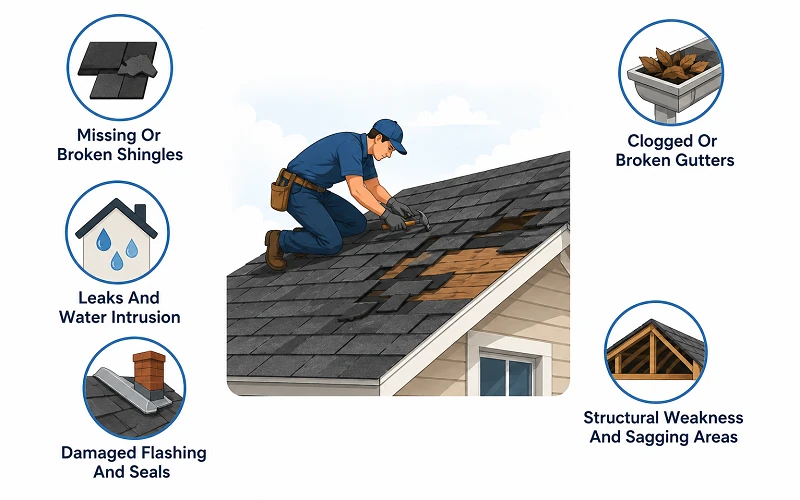
Missing Or Broken Shingles
High winds tend to lift shingles, loosen them, or tear them away completely. This leaves the underlayment exposed, which allows moisture to seep in. Roofers replace damaged shingles and secure loose ones to restore a tight seal.
Shingle repairs also improve the overall appearance of the roof. Professionals match materials and colors to maintain a uniform look. Proper placement ensures the surface can handle rain and wind without weak spots.
Leaks And Water Intrusion
Stormwater can slip through cracks, damaged flashing, or exposed sections. Once inside, it spreads quickly and affects ceilings, walls, and insulation. Roofers locate the exact source and seal it before further damage occurs.
Fixing leaks requires more than surface patchwork. Experts check the surrounding areas to ensure no hidden moisture remains. This careful approach protects the structure and keeps indoor spaces dry and comfortable.
Damaged Flashing And Seals
Flashing, which protects joints around vents and chimneys, can loosen or crack during storms. When this barrier fails, water finds easy entry points. Repair teams replace or reseal flashing to restore its protective role.
Seals around roof features also need attention after severe weather. Professionals use durable materials that resist future wear. This strengthens vulnerable areas and prevents recurring problems.
Clogged Or Broken Gutters
Storm debris like leaves, twigs, and dirt can block gutters and downspouts. Water then backs up and spills over, which may damage the roof edge and siding. Roofers clean and repair the system to keep water flowing properly.
Broken sections of gutters can pull away from the structure. Skilled workers secure or replace these parts to restore function. A well-maintained drainage system supports the entire roof.
Structural Weakness And Sagging Areas
Heavy rain and debris can weaken roof decking or supports. Over time, this leads to sagging sections that affect stability. Professionals inspect the structure and reinforce any compromised areas.
Repair work may involve replacing damaged wood or adding support where needed. This ensures the roof remains strong and evenly balanced. A stable structure helps prevent further issues during future storms.
Wrap up
Storm damage can affect many parts of a roof, from shingles to structural supports. Quick attention keeps small issues from turning into costly repairs. Skilled roofers bring the right tools and knowledge to restore safety and function. roofing storm damage repair plays a key role in protecting homes after severe weather. A strong, well-maintained roof offers peace of mind through every season.