
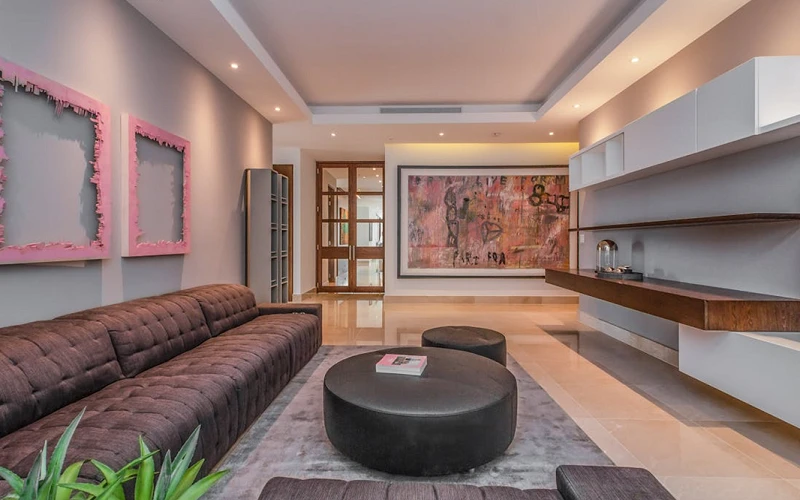
A calm home usually comes down to how things sit, not how much is in the room. You can feel it in the way a space holds you. You walk in, drop your keys, sit down, and nothing feels out of place: no adjustments, no second thoughts, no urge to “fix” anything around you.
Living in Tampa Bay brings its own conditions into play. Light enters strongly and steadily through most of the day. Doors open often. Air moves through the house. Spaces that stay open, breathable, and lightly arranged tend to hold up well in that setting. Rooms that feel overloaded lose that ease quickly. A calm space here usually comes from restraint and placement rather than adding more elements.
Lighting That Feels Right
Lighting settles a room before anything else does. A space can look complete and still feel off if the light lands in the wrong places. Soft layers tend to work best. A lamp near a sofa, a low light in a corner, a bit of glow along a wall. Nothing sharp, nothing forcing attention. The room holds aninviting feel that makes it easy to stay there for a while.
Lighting installation in Tampa Bay area homes usually benefits from planning that goes beyond fixture placement. Hiring experts helps map out how light moves through each room during the day and how artificial light supports it later. The result feels even across the space—no bright patches, no dull corners, just a consistent atmosphere that stays comfortable without effort.
Furniture Placement That Feels Natural
Furniture affects how a room is experienced long before anyone notices the design. A clear path through the space allows movement to happen without hesitation. Walking from one side of the room to the other feels direct and uninterrupted. Nothing blocks the flow, nothing pulls attention away from where you’re going.
Seating works best when it supports how people actually use the room. Chairs angled toward each other create a natural place to sit and talk. Tables stay within reach without cutting into the space. A layout like that makes the room feel usable at all times.
A Good Focal Point
Every room benefits from having one place that holds attention, and it doesn’t need to be bold or decorative. It just needs to exist. A sofa arrangement, a large window, or a single piece on the wall. Something that lifts the space.
Once that point is set, everything else can sit around it without competing. The room feels settled because there’s no confusion about where attention should land. You walk in, and your eyes rest naturally instead of moving from one thing to another.
Keeping Visual Noise Low
Too many small items in one place can make a room feel unsettled, even if everything is neatly arranged. Surfaces filled edge-to-edge tend to hold attention in a way that feels distracting. Leaving space between objects allows each one to sit properly without crowding the rest.
A shelf with a few pieces placed thoughtfully carries a different feel than one filled. A table with only what’s needed feels ready to use at any moment. This kind of setup removes that constant background tension where the eye keeps scanning the room.
Open Surfaces That Feel Settled
Surfaces carry a lot of weight in how a room feels. A table covered in items can pull attention even when everything is neatly arranged. Clearing it down to what actually gets used changes the entire feel of the space. A coffee table with just a book and a small object feels ready. A kitchen counter with only the essentials feels usable the moment you walk in.
Nonetheless, this doesn’t mean everything needs to be hidden away. It means giving each item enough space to sit without crowding the rest. A console table with a single piece and a bit of breathing room around it feels more intentional than one filled edge to edge.
Storage That Stays Out of Sight
A room where everything has a place tends to hold a relaxing feel. Things don’t pile up, and nothing feels temporary. Built-in storage, closed cabinets, or even simple baskets can keep everyday items nearby without leaving them out in the open.
A living room where blankets, remotes, and small items are tucked away feels easier to sit in. A bedroom with clear surfaces and hidden storage carries a sense of order without effort. You don’t notice the storage itself. You notice the absence of clutter.
Color That Stays Easy on The Eyes
Color affects how long you can stay in a space without feeling unsettled. A room where tones sit well together feels steady from one wall to the next. Nothing pulls attention too quickly. Everything feels connected without trying to match perfectly.
Walls, furniture, and smaller details can all sit within a similar range without feeling repetitive. A soft palette across the room allows light to move through the space without interruption. The room holds a calm presence that doesn’t need bold choices to feel complete.
Seating That Feels Anchored
A seating area works best when it feels placed rather than scattered. Chairs and sofas arranged with intention create a sense of stability. The space feels ready to be used without needing adjustment.
A rug under a seating area can help hold everything together. Tables placed within reach make the setup feel practical. When seating is arranged with care, people settle into it naturally. The room supports conversation, rest, or quiet time without needing any changes.
Smooth Flow Between Rooms
Moving from one room to another should feel natural. A home where each space feels disconnected can interrupt that sense of calm. Keeping some consistency between rooms helps everything feel tied together without needing identical designs.
Flooring, tones, or even the way furniture is placed can carry a similar feel from one space to the next. Walking through the home feels continuous. Nothing feels abrupt. The transition from one area to another happens without drawing attention to itself.
Window Treatments That Let Light In
Windows impact how light enters a room throughout the day. Coverings that feel too heavy can block that flow and make the space feel closed in. Lighter treatments allow sunlight to pass through while still giving a sense of privacy.
Sheer curtains, simple blinds, or minimal coverings can soften incoming light instead of stopping it. The room stays bright without feeling exposed. Light continues to move through the space in a natural way, which keeps everything feeling open and easy.
A calm home shows how each part of the space is handled. Light, placement, storage, and restraint all work together without standing out on their own. The result feels natural and easy to live in every day.