
You feel it when you chew on one side because the other side does not feel right anymore. It is not sharp pain, not always, just a kind of weakness that makes you adjust without thinking. Most people do this longer than they admit.
In Cherry Creek, people tend to stay on top of their dental care. Regular cleanings, better habits, and a focus on appearance as well as health. Even then, lifestyle plays a role. Diet, stress, and small delays in treatment can affect bone and jaw strength over time. What looks like a simple dental issue on the surface is often tied to what is happening underneath.
The Part of the Smile You Cannot See
When people think about dental work, they usually picture teeth. Shape, color, alignment. That is what shows. What supports those teeth, though, does not get much attention.
The jawbone holds everything in place. It supports teeth, keeps them stable, and helps distribute pressure when you bite or chew. When that support weakens, the effects show up slowly. Teeth may shift. Gums may change. Things feel less solid.
This kind of change is easy to ignore at first. It does not always hurt. It just feels different. That difference is often the first sign that the foundation needs attention.
How Dentists Rebuild What Has Been Lost
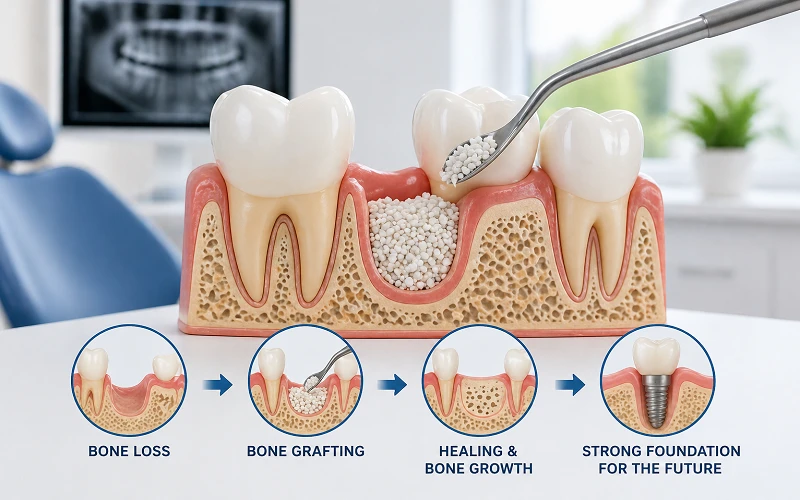
When bone loss happens, it does not come back on its own. The body does not replace it in the same way it heals a cut or a bruise. That is where bone grafting in Cherry Creekcomes in, designed to rebuild what has been lost beneath the surface.The process is not as complicated as it sounds when explained simply. Material is placed in the area where bone has weakened or disappeared. Over time, the body accepts it and builds around it. It becomes part of the structure again.
The focus is on restoring strength before moving forward with other treatments. It shows that rebuilding is often the first step, not the last.
Why Bone Loss Happens in the First Place
Bone loss does not usually happen overnight. It develops slowly, often after tooth loss or untreated dental issues. When a tooth is missing, the bone that once supported it no longer gets the same stimulation.Without that pressure from daily use, the bone begins to shrink. It is a gradual process. You do not feel it happening, but over time, the structure changes.
Gum disease can also play a role. Infection affects the tissue and the bone beneath it. If left untreated, it weakens the support system that keeps teeth in place.These causes are common, which is why rebuilding procedures are more common than people expect.
How Daily Habits Affect the Foundation Over Time
Rebuilding is one part of the process, but what happens after matters just as much. Daily habits tend to shape how well that foundation holds up. Things like grinding teeth at night, skipping routine cleanings, or even diet choices can slowly affect the jaw again.
It is not always obvious. Damage from habits builds quietly, similar to how the original problem started. That is why dentists often talk about maintenance after treatment. The goal is not just to fix the issue once, but to keep it from returning. Small adjustments in daily routine can make a difference, even if they do not feel significant at first.
What the Rebuilding Process Feels Like
There is often concern about what these procedures involve. It sounds technical, and that can make people hesitate. In reality, it is usually handled in a controlled and careful way.The area is prepared, the material is placed, and then time is given for healing. The body does most of the work after that. It integrates the new material, building a stable base over weeks or months.
Recovery varies, but it is often less intense than people expect. There may be some discomfort, but it tends to be manageable. The bigger factor is patience. The process takes time, and that can feel slow.
Why Rebuilding Comes Before Other Treatments
Many advanced dental treatments rely on a strong foundation. Implants, for example, need solid bone to stay in place. Without it, the treatment may not hold up over time.This is why dentists often focus on rebuilding first. It creates a base that can support future work. Skipping this step can lead to problems later, even if the initial results look fine.It is not always obvious to patients why this step is necessary. They may want to move straight to visible results. But without support underneath, those results may not last.
Changes That Patients Notice Over Time
After rebuilding, changes tend to show up gradually. The area feels more stable. Pressure when chewing becomes more balanced. There is less need to favor one side.These are small shifts, but they matter. They improve daily comfort and make other treatments more reliable. It is not always dramatic, but it is noticeable.There is also a psychological side. Knowing that the structure is stronger can change how people use their teeth. They stop compensating. They trust the function again.
The Role of Early Attention
One thing that comes up often is timing. The earlier the bone loss is addressed, the simpler the process tends to be. Waiting allows the condition to progress, which can make treatment more involved.That said, many people wait because the signs are not obvious. There is no clear moment when they realize something is wrong. It builds quietly.Regular checkups help with this. Dentists can spot changes that are not visible to the patient. They can suggest action before the issue becomes more complex.
Wrap Up
In the end, rebuilding the foundation is about stability. Teeth depend on bone. Treatments depend on the structure. Without that base, everything else becomes less reliable.It is not the most visible part of dental care, but it is one of the most important. Addressing it does not just fix a problem. It supports everything that comes after.
That is why these procedures are not treated as optional when needed. They are part of restoring function in a way that holds up over time.