
A poorly installed HVAC system can turn a comfortable home into a constant source of frustration. Uneven temperatures, rising energy bills, and strange noises usually trace back to mistakes made during setup. Many people focus on the unit itself, yet the installation process plays a much bigger role in how well the system performs over time.
Several key factors shape the outcome, and each one deserves careful attention. Working with a reliable HVAC installation contractor and understanding what affects system performance can help avoid common setbacks. This article walks through the main elements that influence installation success and explains how each one contributes to a smooth, long-lasting result.
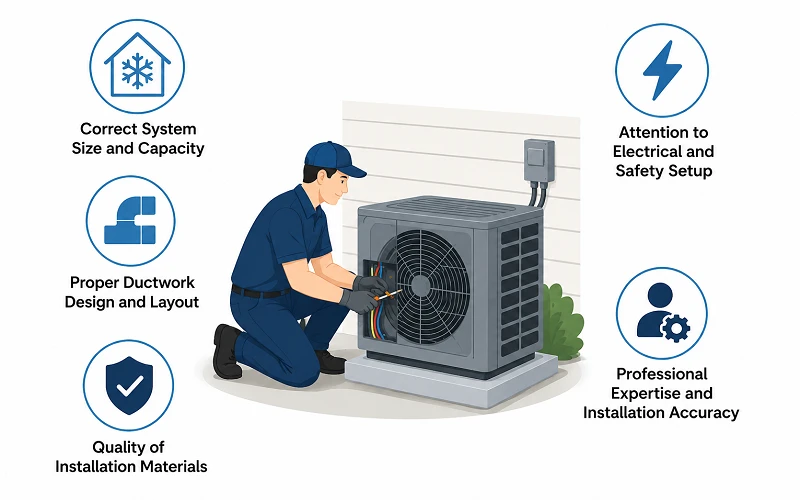
Correct System Size and Capacity
Choosing the right system size sets the foundation for proper performance. A unit that is too small will struggle to maintain consistent temperatures, while an oversized system may cycle too frequently and wear out faster. Both situations lead to discomfort and higher energy use.
Accurate load calculations take into account room size, insulation, and climate conditions. These details help determine the correct capacity for your space. Skipping this step or relying on rough estimates can create long-term problems that are difficult to fix after installation is complete.
Proper Ductwork Design and Layout
Ductwork acts as the pathway for heated or cooled air, so its design matters greatly. Poorly planned ducts restrict airflow and create uneven temperature distribution throughout the home. Even a high-quality system cannot perform well if the airflow is blocked or inconsistent.
Sealed and balanced ducts allow air to move efficiently from one area to another. Leaks or gaps in the system reduce performance and waste energy. Paying attention to layout, material quality, and proper sealing ensures the system delivers consistent comfort across all rooms.
Quality of Installation Materials
The materials used during installation influence both performance and durability. Low-quality components may seem cost-effective at first, but they tend to wear out quickly and cause repeated issues. This includes everything from insulation materials to mounting hardware.
Reliable components support the system and help it operate under stable conditions. Proper insulation reduces energy loss, while strong connections prevent leaks and mechanical stress. Choosing dependable materials helps extend the life of the system and reduces the need for frequent repairs.
Attention to Electrical and Safety Setup
Electrical connections play a critical role in system operation. Incorrect wiring or poor connections can lead to system failures or safety concerns. Even small mistakes during this stage can disrupt performance and increase the risk of breakdowns.
A careful approach ensures that all connections meet required standards. Safety checks confirm that the system runs smoothly without posing any hazards. Taking time to verify the electrical setup creates a stable environment for the system to function reliably every day.
Professional Expertise and Installation Accuracy
Experience makes a noticeable difference in how well an HVAC system performs after installation. Skilled professionals understand how each component fits together and how small adjustments can improve overall efficiency. Their approach focuses on precision rather than speed.
An experienced HVAC installation contractor pays close attention to detail, from system placement to final testing. They identify potential issues before they turn into problems and ensure that everything operates as expected. This level of expertise supports long-term performance and reduces the chance of unexpected failures.
Wrap up
A successful HVAC installation depends on more than just selecting the right unit. Factors such as system size, duct design, material quality, and proper setup all work together to shape performance. Careful planning and attention to detail help avoid unnecessary complications.
With the support of a knowledgeable HVAC installation professional, homeowners can achieve reliable comfort and steady efficiency, making daily living more comfortable and stress-free.