
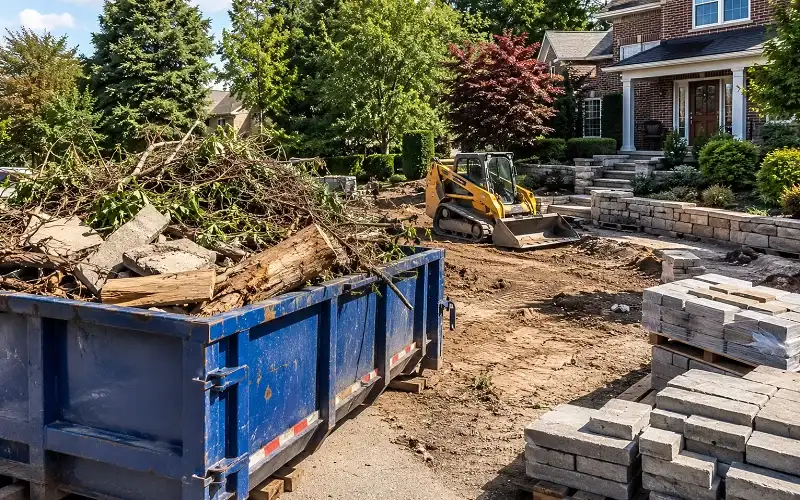
Large landscape renovation projects can completely transform a property’s appearance and functionality, but they also generate substantial amounts of debris throughout every stage of construction. Whether contractors are redesigning residential landscapes, installing outdoor living spaces, rebuilding commercial properties, or completing large-scale hardscape projects, proper debris management plays a major role in maintaining productivity and keeping the project on schedule.
Brush, soil, concrete, stone, old patios, fencing, tree stumps, sod, and construction materials can accumulate quickly as work progresses. Without a structured debris removal plan, valuable workspace can disappear, equipment movement becomes more difficult, and crews may spend unnecessary time working around piles of waste instead of completing the project.
Why Landscape Renovations Produce So Much Debris
Unlike routine landscape maintenance, renovation projects often begin with extensive site preparation and demolition. Existing plants, trees, retaining walls, walkways, irrigation systems, patios, decks, and outdoor structures may all need to be removed before installation of new features can begin.
As construction progresses, contractors typically generate multiple waste streams including vegetation, excavation spoils, broken concrete, stone, lumber, packaging, and general construction debris. Because landscape projects frequently cover large areas, waste can quickly spread throughout the property if cleanup is not carefully coordinated.
Planning for debris removal from the beginning helps maintain better organization throughout every phase of construction.
Create a Waste Management Plan Before Work Begins
Successful landscape contractors often develop a debris removal strategy during the planning stage rather than waiting until demolition starts.
A comprehensive plan should address:
- Expected debris volume
- Types of materials being removed
- Equipment access routes
- Temporary staging locations
- Disposal schedules
- Material delivery coordination
Having these logistics established before crews arrive helps prevent delays once work begins and allows demolition and installation to proceed more efficiently.
Establish Centralized Collection Areas
One of the simplest ways to keep a landscape renovation organized is by creating centralized collection points for debris. Rather than allowing brush, broken concrete, and removed materials to accumulate throughout the property, crews can transport waste to designated disposal areas during the workday.
Many landscape contractors useTemporary Dumpster services to simplify debris management during large outdoor renovation projects. A centralized disposal system reduces repeated material handling while helping crews maintain cleaner and more organized work zones.
This approach also makes it easier to monitor debris accumulation and coordinate timely removal.
Coordinate Demolition with Cleanup
Landscape renovations often begin with demolition activities such as removing patios, sidewalks, retaining walls, fencing, decks, shrubs, trees, and other existing features. These tasks can generate significant debris within the first few days of the project.
Rather than allowing demolition materials to remain onsite, contractors should coordinate regular removal throughout this phase. Continuous cleanup creates more working space and allows grading, excavation, and installation crews to begin their work sooner.
Keeping demolition waste under control helps maintain steady project progress.
Manage Vegetation and Organic Waste
Large landscape projects frequently involve removing mature shrubs, tree limbs, brush, sod, and other organic materials. Although these materials may be relatively lightweight, they can occupy substantial space if left unmanaged.
Crews should collect vegetation as clearing progresses instead of creating multiple piles around the property. Processing brush into manageable sections and removing organic waste regularly helps preserve valuable workspace and improves equipment access throughout the project.
Consistent handling also creates a cleaner and more professional job site.
Plan for Heavy Construction Materials
Many landscape renovations include hardscape features such as retaining walls, patios, outdoor kitchens, walkways, fire pits, and decorative stonework. Demolition of existing hardscapes often produces large quantities of heavy debris including concrete, brick, stone, and pavers.
These materials require additional planning because their weight can quickly affect disposal capacity. Contractors should coordinate heavy debris removal with demolition activities to prevent overcrowded work areas and maintain efficient production.
Proper planning helps avoid interruptions during the busiest phases of construction.
Coordinate Material Deliveries
Landscape renovation projects require a steady flow of incoming materials including pavers, mulch, topsoil, gravel, decorative stone, lumber, plants, irrigation supplies, and outdoor fixtures.
Staging these products separately from demolition debris helps maintain organization while reducing the risk of damaging new materials. Clear delivery areas also allow suppliers to unload efficiently without interfering with active construction work.
Balancing incoming materials with outgoing debris keeps the project site functioning smoothly.
Maintain Equipment Access
Landscape construction relies heavily on skid steers, compact excavators, loaders, dump trailers, and other equipment. These machines require unobstructed travel routes throughout the property.
Debris accumulation can quickly restrict equipment movement and reduce productivity. Contractors should maintain clear operating lanes by removing waste before it begins interfering with excavation, grading, or installation activities.
Keeping access routes open helps crews work more efficiently while reducing unnecessary machine movement.
Schedule Cleanup Throughout Every Phase
Debris management should continue throughout the entire renovation rather than focusing only on demolition. Every stage of the project generates waste, including excavation, installation, planting, irrigation, and final detailing.
Regular cleanup helps:
- Keep work areas organized
- Improve crew productivity
- Maintain safer job site conditions
- Simplify transitions between construction phases
Scheduling routine cleanup prevents waste from becoming a larger issue later in the project.
Protect Existing Features
Not every part of the property is being renovated. Existing trees, gardens, lawns, driveways, and structures often remain while construction takes place nearby.
Organized debris removal helps reduce unnecessary traffic through these areas and minimizes the risk of accidental damage. Contractors should establish transport routes that avoid sensitive landscaping whenever possible.
Protecting existing property features contributes to higher-quality project results and improved customer satisfaction.
Adapt to Changing Project Conditions
Landscape renovation projects frequently uncover unexpected conditions such as buried concrete, old utility lines, hidden drainage systems, or unstable soil. These discoveries can increase debris volume and require adjustments to the original cleanup plan.
Contractors who remain flexible can modify disposal schedules, increase capacity, or adjust staging areas without disrupting overall project progress.
Being prepared for changing conditions is an important part of managing large outdoor renovations successfully.
Improve Productivity Through Better Organization
Well-organized projects allow crews to spend more time installing new landscape features and less time moving debris or clearing work areas. Efficient waste management reduces unnecessary labor while improving coordination between equipment operators and installation crews.
Maintaining organized staging areas also simplifies material handling and allows project managers to monitor progress more effectively.
Small improvements in debris management often produce significant gains in overall efficiency.
Present a Professional Job Site
Property owners often evaluate contractors based on how well their projects are managed throughout construction. Clean work areas, organized material storage, and consistent debris removal create confidence that the renovation is being handled professionally.
An orderly project also makes walkthroughs easier and allows clients to better visualize the transformation taking place. Professional site management reflects positively on the contractor and contributes to a better overall customer experience.
Debris removal planning is a critical component of successful landscape renovation projects. By developing a waste management strategy before work begins, coordinating cleanup with demolition, maintaining centralized disposal areas, and scheduling regular debris removal, landscape contractors can keep projects organized and productive from start to finish.
When debris is managed efficiently, equipment operates more effectively, crews work more safely, and projects progress with fewer interruptions. For contractors managing large landscape renovations, thoughtful debris planning is an essential part of delivering high-quality results and maintaining satisfied clients.