
You hear a faint drip at night and tell yourself it is probably nothing, maybe just condensation or a loose pipe somewhere. By morning, the ceiling looks the same, so the thought gets pushed aside as most small home issues do.
That is usually how it starts. Roof problems rarely show up all at once. They build quietly, then surface in ways that feel easy to ignore at first. Homeowners wait months, sometimes longer, because nothing looks urgent. The roof, for the most part, does not demand attention. It just keeps sending small signals.
The Early Signs Are Rarely Dramatic
Most people expect something obvious, like a major leak or visible damage, before they take action. But in reality, the early signs are subtle and a bit inconsistent. A stain that appears and then fades. A patch of shingles that looks slightly darker than the rest. Gutters that seem to clog more often than they used to. These things do not feel urgent on their own so they get brushed off because they do not interrupt daily life in a clear way. Still, they tend to point to slow wear happening over time.
When Repairs Stop Being Enough and Deeper Work Is Needed
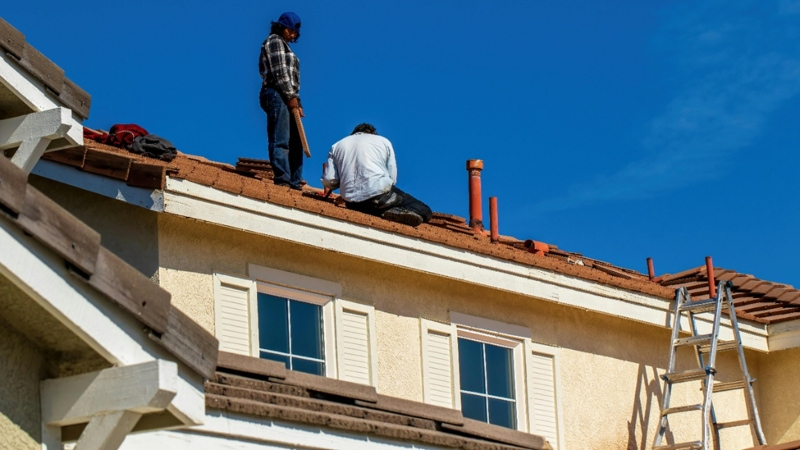
There comes a point where small fixes start repeating themselves. At some stage, though, the pattern becomes clear. The roof is no longer failing in one place. It is aging across the whole surface. That shift is not always obvious, especially if different areas fail at different times. At this point, you need to consult a reliable roof replacement company to restore your property’s primary defense surface.
This is usually where homeowners begin to consider larger work, even if they hesitate to say it out loud. Understanding when that shift happens is not always simple, which is why many turn to professionals for a clearer assessment of what is actually going on above the ceiling. The right roofers would know exactly what to look for and where to look. Their focus is not on temporary fixes, but permanent solutions.
Water Does Not Always Travel Straight Down
One of the more confusing parts of roof issues is how water behaves. It rarely drips directly below the source. Instead, it moves along beams, insulation, or other surfaces before it becomes visible inside the house.
This can lead to misdiagnosis. A stain in one corner might be caused by damage several feet away. Fixing the visible spot does not solve the real problem. It just delays it. Over time, moisture that stays hidden can affect wood framing or even electrical systems. That is not always noticed right away. It builds quietly, much like the early signs themselves.
Shingles Tell Their Own Story
If you take a step back and look at the roof from a distance, patterns begin to show. Some areas may look uneven. Others might have curling edges or missing pieces that were not there before. Shingles are designed to protect against the weather, but they do wear out. Sun exposure dries them over time, making them brittle. Wind can lift them slightly, even if it does not tear them off completely.
Granules, the small rough particles on shingles, also start to shed. You might notice them collecting in gutters or near downspouts. That is a sign the protective layer is thinning, which reduces the roof’s ability to handle heat and water.
The Inside of the House Often Gives It Away
Sometimes the roof does not show clear signs from the outside. Instead, the clues appear indoors. A faint musty smell in certain rooms. Paint that starts to bubble or peel near the ceiling. Slight discoloration that does not quite look like a typical stain. These changes are easy to overlook because they seem minor. They do not always connect immediately to the roof. But over time, they form a pattern that points upward.
It is also common for insulation to be affected before anything else is noticed. Wet insulation loses its effectiveness, which can lead to uneven temperatures inside the home. Rooms may feel warmer or cooler than usual without a clear reason.
Age Plays a Bigger Role Than People Expect
Every roof has a lifespan, even if it looks fine on the surface. Materials break down gradually, and that process does not always show in obvious ways. Homeowners sometimes rely on appearance alone, assuming that if it looks intact, it must still be doing its job. That is not always the case. A roof can appear solid while losing its ability to protect effectively. If the roof is nearing the end of its expected life, small issues tend to multiply. Repairs become more frequent, and their effectiveness starts to drop. That pattern usually signals a larger shift, even if nothing dramatic has happened yet.
Temporary Fixes Can Become a Habit
It is easy to treat roof issues as isolated events. A leak gets fixed, and life moves on. Then another issue comes up, and it gets handled the same way. Over time, this creates a cycle where temporary fixes feel like a long-term solution. It is understandable. No one wants to take on a larger project unless it feels necessary. But the roof does not reset after each repair. The underlying wear continues. Eventually, the effort spent on repeated fixes adds up, often without fully solving the problem.
There is a noticeable difference between homes where issues are addressed early and those where they are delayed. Early action tends to limit the scope of work. It keeps damage contained and easier to manage. Waiting, on the other hand, allows small problems to grow. Not always quickly, but steadily. By the time they demand attention, the work required is usually more involved.
Most roofs do not fail suddenly. They give signs, often more than once. The challenge is recognizing those signs for what they are, rather than what they seem like at first glance. And that, in a way, is the real message. The roof is not silent. It just speaks in ways that are easy to miss.
If you have any questions or would like the latest updates, don’t hesitate to contact us.