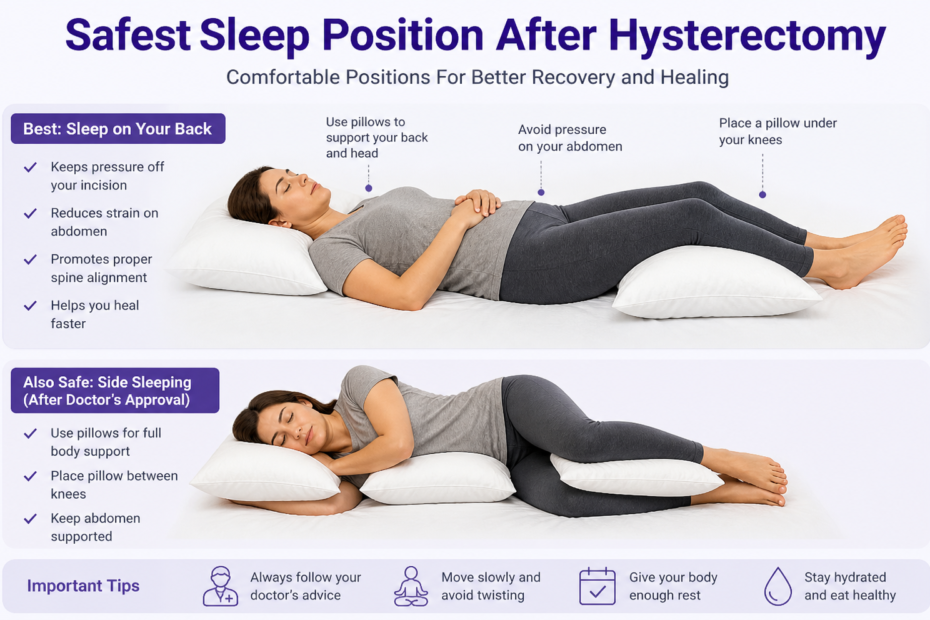
A hysterectomy is a major abdominal or pelvic procedure, and the body needs serious rest to heal well. Most women find that the first few weeks at home are the hardest, especially at night. Poor sleep can slow down the whole recovery process.
The right sleep position can ease discomfort, reduce tension on the abdomen, and help the body restore itself faster. This article covers doctor-approved positions on How to Sleep After Hysterectomy.
Back Position for Safe Rest After Surgery
The safest way to rest after surgery is on the back with proper support. This position keeps pressure away from the abdomen and helps protect the surgical area. Many doctors advise this method because it supports proper body alignment. The spine stays straight, which helps reduce strain on muscles near the abdomen. A calm posture also helps reduce tension in the lower body. This setup supports comfort and allows the body to recover in a steady way.
Use Pillows to Support the Lower Body
Full body pillows play a key role in comfort after surgery and help keep the body in a safe posture. A full body pillow helps keep a slight bend in the legs, which reduces pressure on the lower back. This small change supports the abdomen and keeps strain away from the surgical area. Soft support around the sides also helps prevent body pain and chronic conditions. A stable setup helps the body stay relaxed through the night. Good support also helps maintain balance and reduces discomfort.
Keep Upper Body Slightly Raised for Comfort
A slight lift in the upper body can improve comfort and help ease pressure on the abdomen. This setup supports natural posture and allows the body to rest in a calm way. The following tips help create the right position for rest:
- Place two or three pillows under the upper back to create a gentle lift.
- Keep the head in line with the spine to avoid neck strain.
- Adjust pillow height to find a position that feels stable and relaxed.
- Use a firm base so the body does not sink or shift during rest.
- Consider a full-body pillow system designed specifically for surgery recovery that includes all of the above components.
Side Position With Extra Support After Approval
Side rest may become an option after proper approval and with full support. This position must include careful pillow placement to protect the abdomen. The following points help create a safe setup for side rest:
- Place a pillow between the legs to keep hips in line and reduce strain.
- Add a soft pillow near the abdomen to provide gentle support.
- Keep the back straight to avoid pressure on the lower body.
- Change sides slowly to avoid sudden movement near the surgical area.
Avoid Pressure on the Abdomen During Sleep
Direct pressure on the abdomen can cause discomfort and delay recovery. Stomach rest places weight on the surgical area and should be avoided. Guidance such as How to Sleep After Hysterectomy highlights the need to keep weight away from the front of the body. A balanced position helps reduce strain and supports a calm rest cycle. The body heals best when no excess pressure exists on sensitive areas. Careful posture helps maintain comfort through each rest period.
Proper sleep posture after a knee replacement surgery Singapore supports comfort and steady recovery without added strain.. A back position with slight upper lift and knee support helps protect the abdomen and maintain balance. Side rest can follow with care and support once approved. Focus on stable posture each night to support better rest. A well-set sleep space and correct position help guide the body toward a smoother and more comfortable recovery path.