
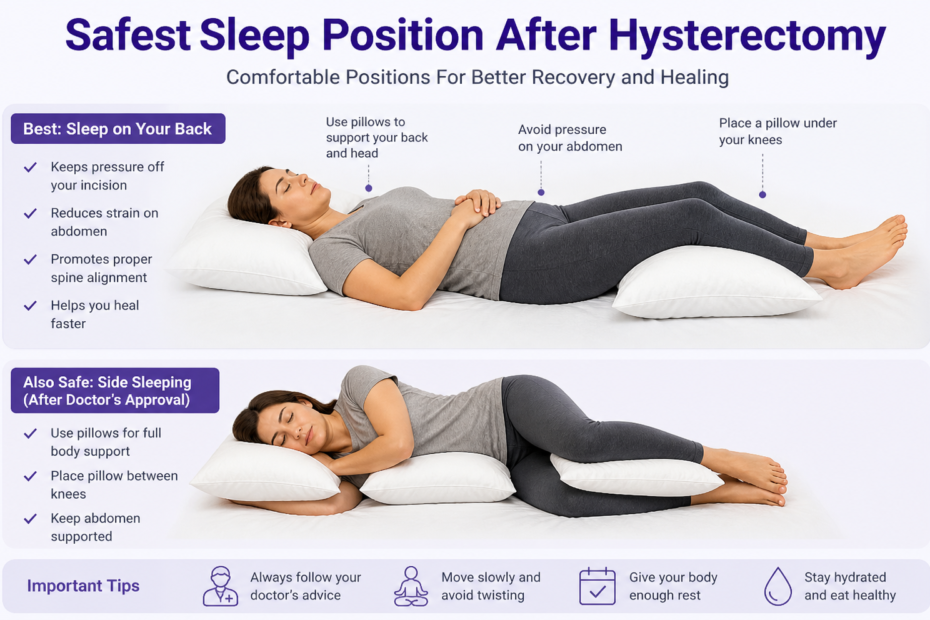
A hysterectomy is major surgery, and the body needs time and careful support to heal. Many women find the first weeks at home challenging, particularly when it comes to getting restful sleep. Discomfort, limited mobility, and concern about the surgical area can make nighttime difficult.
Sleep position can influence comfort, but what works best varies from person to person and depends on the type of surgery, individual healing progress, and specific instructions from the surgical team. Proper sleep posture after a knee replacement surgery Singapore supports comfort and steady recovery without added strain.
The information below is general in nature and should not replace personalized medical advice. Always follow the guidance given by your surgeon or healthcare provider.
Back Sleeping with Support
Many recovery guidelines suggest starting with back sleeping because it can help keep pressure off the abdomen. Lying on the back with the spine in a relatively neutral position may reduce strain on the surgical area for some patients.
Using pillows to support the body can improve comfort:
- A pillow under the knees can create a gentle bend in the legs and ease lower-back tension.
- Side pillows or a body pillow can help limit rolling during sleep.
- A stable mattress and supportive pillows help maintain alignment through the night.
These adjustments are commonly recommended for comfort, but individual needs differ. Your care team can advise whether this approach suits your situation.
Elevating the Upper Body Slightly
Some people find that a modest elevation of the upper body feels more comfortable in the early recovery period. This can be achieved by placing extra pillows under the upper back and head, or by using an adjustable bed if available.
Helpful points often include:
- Keeping the head and neck in a comfortable line with the spine
- Avoiding excessive elevation that causes sliding or strain
- Ensuring the setup feels stable so the body does not shift unexpectedly
Again, the degree of elevation, if any, should align with your surgeon’s recommendations.
Side Sleeping (Only When Approved)
Side sleeping is sometimes introduced later in recovery, once the surgical team indicates it is appropriate. When permitted, careful support is usually advised:
- A pillow between the knees to help keep the hips aligned
- Gentle support near the abdomen if it feels helpful
- Slow, controlled movement when changing positions
Moving too quickly or without support can cause discomfort. Do not begin side sleeping until your doctor or nurse has confirmed it is suitable for your stage of healing.
Positions to Approach with Caution
Lying directly on the stomach places pressure on the abdomen and is generally discouraged in the early recovery period. Any position that creates direct pressure or significant strain on the surgical area should be avoided until cleared by a healthcare professional.
Supporting Better Rest During Recovery
In addition to position, other factors can influence sleep quality after surgery:
- Taking prescribed pain medication as directed so discomfort does not disrupt rest
- Keeping the bedroom quiet, dark, and at a comfortable temperature
- Using supportive pillows consistently
- Avoiding sudden twisting or reaching movements when getting in or out of bed
- Following all post-operative instructions regarding activity limits and wound care
Healing timelines vary. Some women feel ready for different positions sooner than others. Progress should always be guided by professional medical advice rather than general articles.
Important Disclaimer
This article offers general information only and is not medical advice. Hysterectomy recovery differs based on surgical approach (abdominal, vaginal, laparoscopic, or robotic), individual health factors, and specific post-operative instructions. Always follow the guidance of your surgeon, gynecologist, or care team. Contact your healthcare provider promptly if you experience increasing pain, unusual swelling, fever, bleeding, or other concerning symptoms.
About the Author
Dr. Elena M. Ruiz is a board-certified obstetrician-gynecologist with more than 14 years of clinical experience focused on women’s surgical recovery and postoperative care. She has worked in both hospital and outpatient settings, helping patients navigate the practical aspects of healing after major gynecologic procedures.
Dr. Ruiz regularly contributes educational content aimed at improving patient understanding of recovery processes while emphasizing the importance of individualized medical guidance.