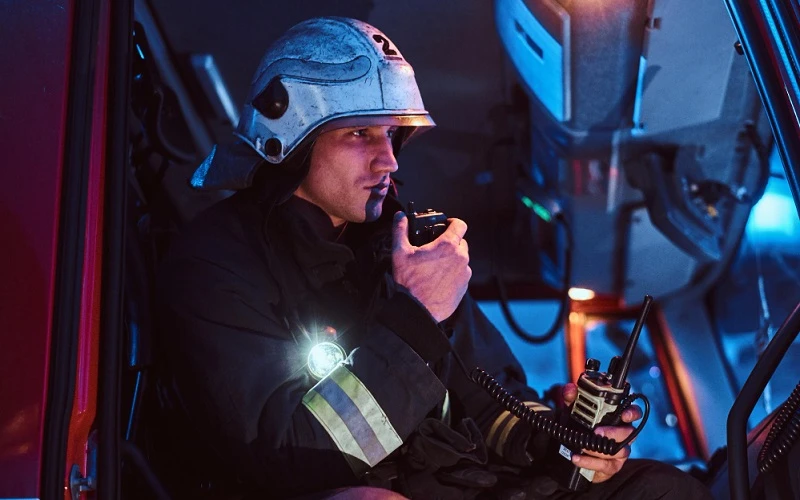
There are different types of walkie-talkies available today. Initially, standard analog radios were the only walkie-talkies used to communicate via radio waves that travel from the air to other radios on the same channel. These are converted to sound, allowing the user on the other end to receive the audio communication.
While radio technology has evolved, these devices are still used today because they provide continuous communication over short distances when cell service is unavailable. They also help with team communication, like workers completing construction projects, and family communication while camping. Today, there are additional radio models that operate on cloud infrastructure, enabling users to communicate across vast distances.
Since these devices use multiple cell carriers, failover methods, and network redundancy, they are a helpful option for users who are far apart. They’re also useful in areas with limited cell service. Although there are advantages to these devices, traditional walkie talkies also matter for their reliability during emergencies and other instances when cell service fails.
Walkie Talkies: Cheaper Than Cellphones
Devices like walkie talkie radios matter for their cost-effectiveness. For individuals in need of communication resources, walkie-talkies are cheaper than smartphones and cell plans. For businesses looking to save money, walkie-talkies can be a helpful alternative to maintaining communication.
Useful Coordination Tools For Businesses
Many businesses continue to utilize walkie talkies. Since team management requires open communication, walkie-talkies act as a major asset to many businesses across industries. From security to hospitality, coordination greatly improves with walkie talkies, making them essential resources today.
Reliable Outdoor Communication
If you are in close proximity outdoors, traditional walkie-talkies work well to stay in touch with those in your group. No signal is required, enabling effective communication in remote areas without wifi or cell service. For those in groups spending time in the wilderness, camping, or attending outdoor events, walkie-talkies remain reliable communication devices.
Helpful For Emergency Response
When emergencies strike or other situations limit power access, walkie-talkies are allies. People can continue to communicate and get to safety by relying on them when cell service fails. Natural disasters, power outages, and weather emergencies can be handled more easily with walkie-talkies, as they often do not require cell service.
A No-Hassle Communication Option
Specific safety features are essential for search-and-rescue missions and for general safety while navigating outdoors. Devices with PTT functionality make it easy to communicate with others while remaining hands-free. With a one-click method for talking to others, you can stay in touch without your movement being limited by constantly holding your device.
Smart Components For Communication And Accessibility
Standard walkie-talkies use radio waves to transmit messages to others on the same frequency. Cloud-based talk radios utilize LTE or WiFi connections and multiple network redundancies to stay connected via cell towers. While the technology has changed, both traditional and modern walkie-talkies are critical components for emergencies, effective communication, group coordination, and accessibility.
Note: This content is for entertainment purposes only and is not professional, informational, or educational advice.