
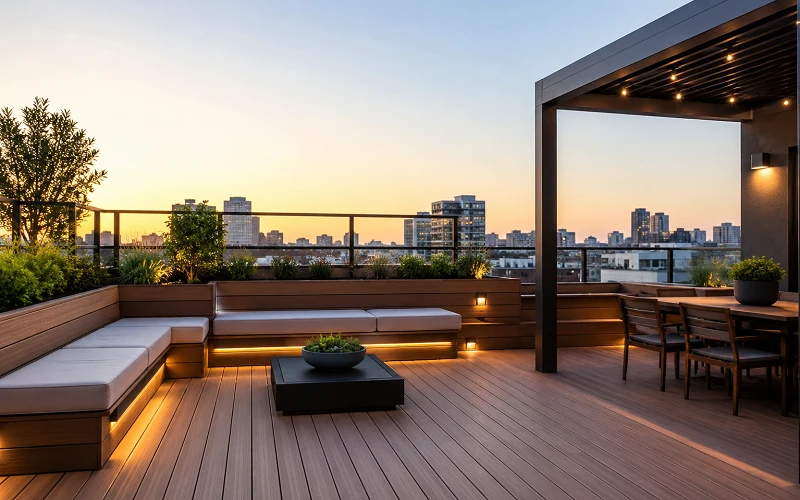
A rooftop deck creates usable outdoor space while increasing property value in a measurable way. Clear planning supports cost control and prevents financial surprises during each construction phase. A structured approach ensures clarity across design, materials, and installation requirements from the start. Take a decisive step toward a planned project with defined cost expectations and professional direction.
Cost estimation for rooftop decks depends on several defined elements that shape the final investment. Each factor contributes through materials, structural work, labor requirements, and compliance obligations. A detailed understanding of these aspects supports accurate budgeting and avoids unexpected financial pressure later. Proper evaluation ensures balanced spending while maintaining structural strength and long-term performance.
Material Quality and Type
Material quality determines durability, appearance, and maintenance demands throughout the deck’s lifespan. Hardwood decking, composite boards, and metal surfaces vary in price due to performance standards. Higher-grade materials resist moisture, heat, and surface wear under different weather conditions.
Protective coatings and surface treatments increase costs while improving resistance against environmental exposure. Correct selection ensures a balance between upfront expense and extended service life. Material sourcing and availability influence pricing due to supply conditions and transportation factors.
Structural Support Requirements
Structural strength defines whether the existing building can support additional deck weight safely. Engineers assess load capacity, foundation stability, and support needs before construction approval. Load-bearing capacity calculations guide the selection of beams and framing components for safety. Steel supports, framing systems, and added beams increase costs due to material volume and complexity.
Older structures require upgrades to meet current safety codes and structural performance standards. Strong support ensures safety and maintains consistent performance under different environmental conditions. Detailed site evaluation ensures accurate assessment of reinforcement needs and structural feasibility.
Design Complexity and Features
Design choices influence overall cost through layout precision and feature integration requirements. Multi-level platforms, built-in seating, and planters increase material usage and labor effort. Railings, pergolas, and lighting systems require detailed planning and precise installation processes.
Integrated drainage systems with proper waterproof membrane layers protect structural components from water damage. A clear design structure supports functionality while maintaining financial control throughout the project. Customized layouts require coordination between design plans and structural constraints for accurate execution.
Labor and Installation Standards
Labor costs depend on contractor expertise, project scope, and required installation precision. Skilled professionals ensure proper alignment, secure fastening, and consistent finishing quality across all surfaces. Specialized tasks such as waterproof sealing demand trained workers and accurate execution methods.
Project timelines influence labor expenses when work duration extends due to complexity or site conditions. Consistent work quality reduces repair needs and supports long-term structural performance. Workforce scheduling and project coordination impact efficiency and contribute to overall labor cost variations.
Permits and Regulatory Compliance
Permit approvals and regulatory requirements contribute directly to total construction costs and timelines. Local authorities require detailed plans, inspections, and verified documentation before project approval. Compliance expenses include application fees, inspection charges, and professional consultation for zoning compliance standards.
Regulations address safety standards, drainage systems, and structural integrity to ensure proper functionality. Proper compliance prevents legal complications and avoids costly revisions after construction completion. Timely approval processes help maintain project schedules and prevent unnecessary delays during construction phases.
Wrap up
A clear understanding of cost factors ensures accurate planning and efficient project execution from start to finish. Material selection, structural support, and design features shape the total investment required. Labor quality and compliance standards further define the final construction cost and long-term value.
Proper planning supports durable and visually refined rooftop decks with consistent performance. Consult experienced professionals to establish a clear plan and move forward with confidence.